

If you have issues with several spaces in your home, fixing one room at a time just doesn’t make sense. When your layout no longer supports how you live, it’s time to consider a home remodel. We offer a guided approach from start to finish, starting with a whole house renovation checklist that brings structure to every decision before construction begins. Take a look.
What Is a Whole-House Renovation?
A whole-house renovation means updating most of your home at once, rather than remodeling one room at a time. It typically includes layout changes, system upgrades, and coordinated finishes throughout rooms. When we guide you through a whole-house renovation checklist, we treat your home as one connected system. Our goal is to align decisions for a cohesive look across multiple spaces.
When a Whole House Renovation Makes Sense
A whole-house renovation can be overwhelming and seem like a daunting task. However, there are times when it just makes more sense. We recommend this route when there are pressing issues across the entire house, not just one isolated area. Here are some situations where a whole-house renovation makes sense:
- When multiple rooms no longer support how you live.
- Updating one space at a time would create mismatched finishes and repeated disruptions.
- Systems, like plumbing, electrical, and HVAC, all need attention, and addressing everything together creates efficiency.
10 Step Whole House Renovation Checklist
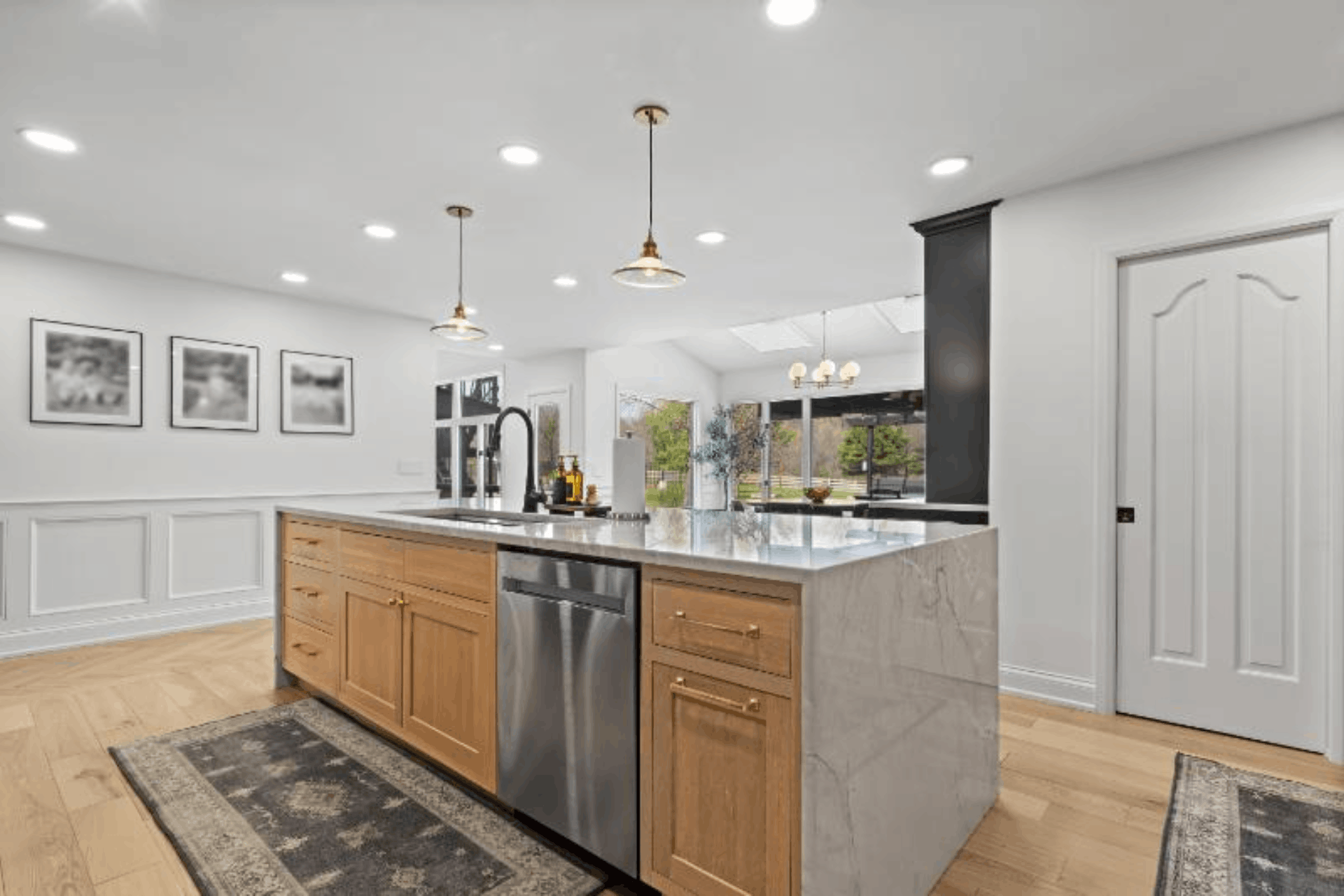
We like to be prepared for big and small decisions. These steps will help prevent unexpected costs from popping up and keep timelines aligned. Take a look:
Step #1: Define the Scope of Your Renovation
The biggest decision is which areas of your home will be included in the renovation. Together, we will define the areas and scope. Taking out walls? Let’s plan for it. Moving systems behind walls? We include that too. Changing finishes? Yep, all in the scope. Clarity here keeps us all on the same page.
Step #2: Establish a Realistic Budget
Your budget is also a huge early step. Knowing this allows us to make sure the scope of the project is covered before we dig into design decisions. Having real numbers in front of us allows us to define what can and cannot be done.
Step #3: Identify Must-Haves vs. Nice-to-Haves
Once you have a budget, you can identify what needs to be done and what would be nice but not necessary. Functionality comes first before wants.
Step #4: Evaluate Structural and Mechanical Systems
In this step, we assess the condition of the “bones”. This includes structural components and framing, as well as the mechanical parts like plumbing, electrical, and HVAC systems. The condition of these systems determines what’s possible within your layout and budget.
Step #5: Determine Layout and Floor Plan Changes
Once we know what is structurally and mechanically sound, we can decide if we can move walls to expand rooms. This will also determine which permits are needed, engineering requirements, and what that means for your budget.
Step #6: Plan for Bathroom and Kitchen Upgrades

Kitchens and bathrooms typically require the most coordination, but they also deliver the highest ROI (up to 80%). When we look at a bathroom and kitchen upgrade, we’re looking at plumbing locations, ventilation, storage design, and whether we need to take out walls. Planning these spaces aligns the layout and construction sequencing.
Step #7: Select Materials, Finishes, and Fixtures
Now is the part most people think of when they think about home renovations: choosing the fun stuff! Flooring, cabinetry, lighting, and countertops complete the design process. These selections must be durable and cohesive throughout the home.
Step #8: Understand Permit and Code Requirements
Although it may not be the most exciting aspect of your project, adhering to local codes is essential. We handle all permit applications and approvals before major work begins, ensuring our progress remains smooth and fully compliant.
Step #9: Prepare for Construction Sequencing
Construction sequencing simply means the order in which we work. Our whole house renovation phases are as follows: demolition, structural work, systems installation, and finishes.
Step #10: Final Punch List and Walk-Through
We always do a final walk-through. This means we review every space carefully to confirm that everything from functionality to finishes meets our agreed-upon scope.
How Long Does a Whole House Renovation Take?
A whole-house renovation typically takes between three and 15 months. Renovations that are primarily cosmetic take around three months, while major renovations that involve layout and system changes, or home additions, take much longer.
As we get into planning your whole house renovation checklist, the details we establish will help us determine a better timeline for your exact needs. Our timelines account for permitting, material lead times, inspections, and sequencing.
Pitfalls to Avoid in Whole House Renovations
Whole-house renovations are exciting, but they also come with more moving pieces than a single-room project. The good news is that most issues homeowners run into are predictable (and avoidable) with the right plan in place. Here are some of the most common mistakes that can derail a whole-house renovation:
Mistake #1: Starting Without a Defined Scope
When the project goals aren’t clearly outlined from the beginning, decisions get made on the fly. A defined scope keeps everyone aligned on what’s included, what isn’t, and what success looks like.
Mistake #2: Letting Budget Creep Build Over Time
Small upgrades add up quickly when they aren’t planned upfront. Establishing priorities early helps you invest where it matters most without losing control of the overall budget.
Mistake #3: Ignoring Core Systems Until It’s Too Late
Electrical, plumbing, HVAC, and structural needs should be evaluated early. Skipping systems planning can lead to expensive rework once finishes are already underway.
Mistake #4: Making Major Changes Mid-Construction
Mid-project layout changes or material swaps often cause delays, added costs, and frustration. The more decisions that are finalized before construction begins, the smoother the renovation process becomes.
Mistake #5: Skipping Permits or Underestimating Code Requirements
Whole-house renovations often require permits and inspections, especially when systems or structural elements are involved. Handling this correctly protects both safety and resale value.
Mistake #6: Poor Construction Sequencing
Whole-home projects require the right order of operations, from mechanical work to finishes. Poor sequencing can slow timelines and create unnecessary disruptions.
Mistake #7: Choosing the Lowest Bid Without Looking at the Process
The lowest quote doesn’t always include the same level of planning, oversight, or craftsmanship. A well-managed renovation is about clarity, communication, and long-term results, not just the starting number.
In our experience, a whole-house renovation checklist helps eliminate many of these pitfalls and keeps expectations clear from the first conversation through the final walkthrough.
Whole House Renovation: Frequently Asked Questions
Is $100,000 enough to renovate a house?
A $100,000 budget supports a partial renovation or specific updates in key areas, like the kitchen and bathrooms. It won’t cover a whole house renovation that requires structural work and system upgrades.
What is the 30% rule for renovations?
The 30% rule suggests you should not spend more than 30% of your home’s value on renovations. This guideline is a good rule of thumb to prevent you from over-improving beyond the neighborhood resale values.
How much does it cost to revamp a whole house?
The cost to revamp a whole house varies depending on the scope of what you need done. Cosmetic finishes cost far less than structural changes and system upgrades.
Is $300,000 enough to renovate a house?
A $300,000 budget is enough for extensive structural updates, system replacements, and high-quality finishes in many homes. The price of a whole house renovation varies by the size of the house, condition, and the scope of work required.
Work With Premier Remodeling on the Renovation of Your Dreams
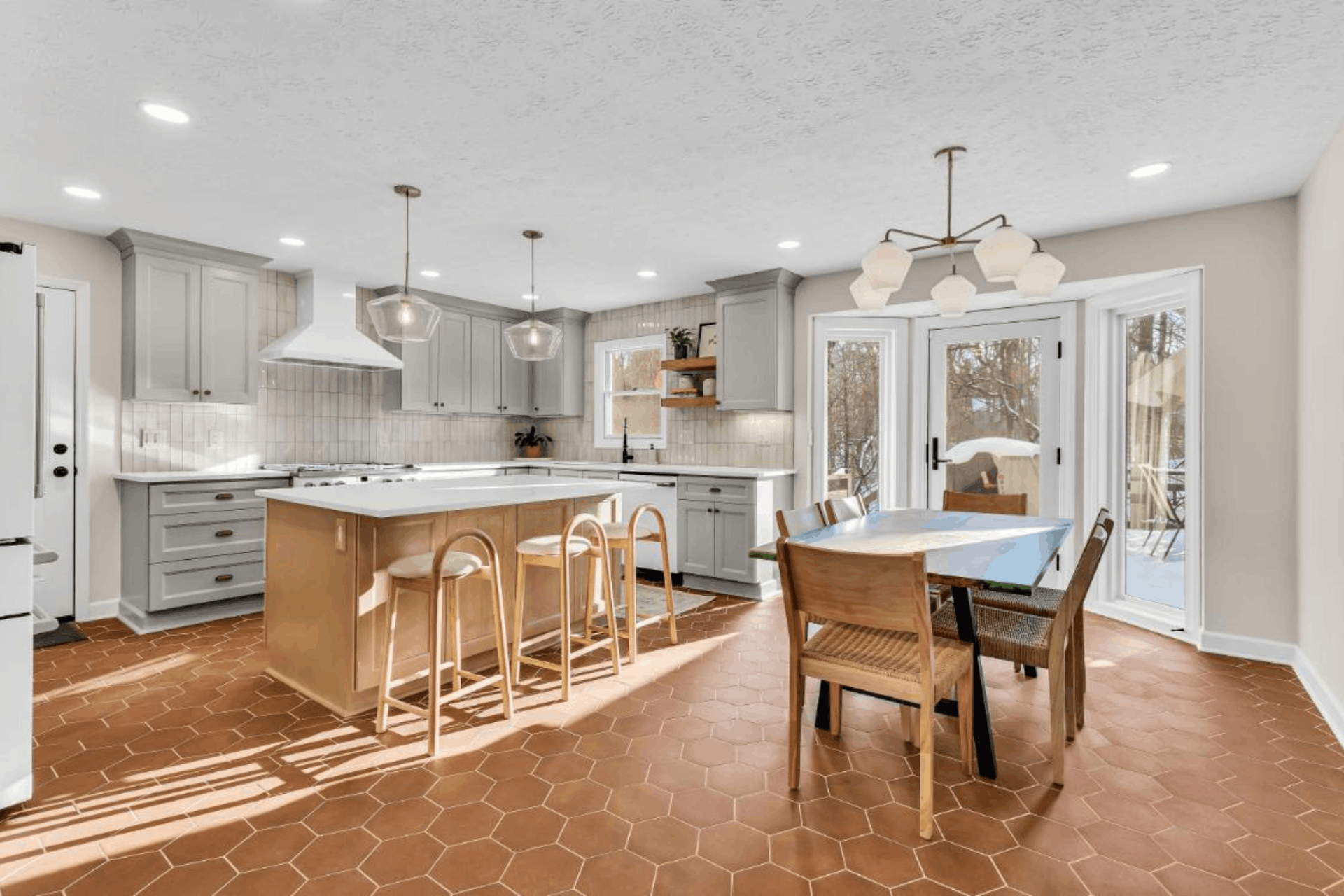
If you’re ready for a whole-house renovation, we’re here to make your dreams come true. Let’s talk through your renovation and make your inspo board a reality.