
Summary
Explore the best bathroom flooring options for style and durability. Compare tile, vinyl, and more with tips for choosing the right finish.
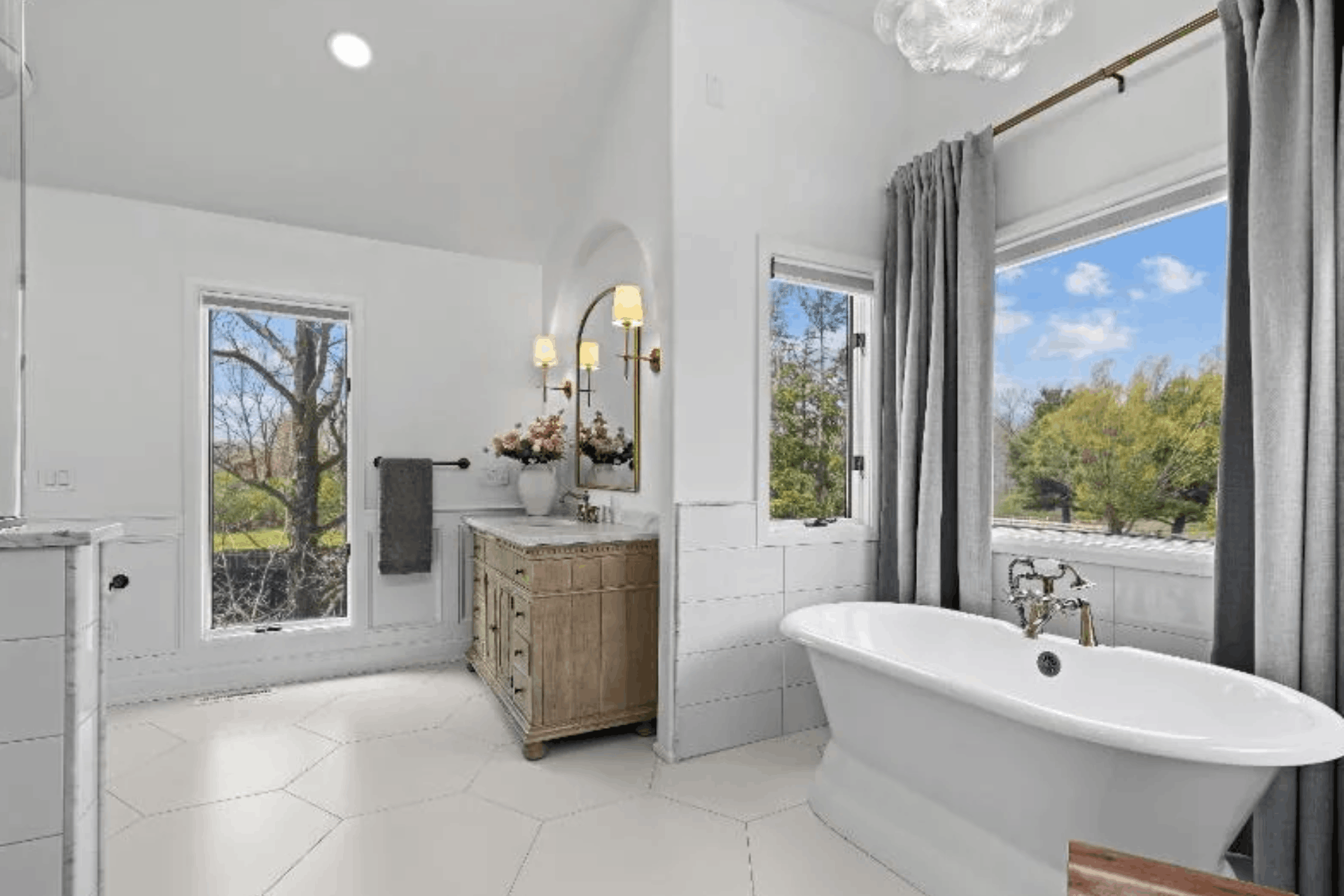
On the surface, picking the best bathroom flooring seems like a simple task. But if you’ve ever tried it, then you know it’s not.
One minute you’re browsing tile samples, and the next you’re comparing durability, water resistance, and grout maintenance, while assessing whether the floor will turn into a skating rink when it gets wet.
Bathrooms demand more from flooring than almost any other room in the house. That’s why choosing the best bathroom flooring is more than just finding something that looks nice. In this guide, we’ll walk you through materials that balance durability, safety, and design so you can choose a floor that holds up to real life.
Your Bathroom Flooring Choices Matter
Bathroom flooring needs careful consideration. Unlike other flooring in your home, the bathroom floor is exposed to moisture. It has to be safe even when wet. It needs to be mold-resistant. And it’s important that it can stand up to high traffic with grace and longevity. Not to mention, you also want it to look good!
8 Bathroom Flooring Trends You’ll Love Long-Term
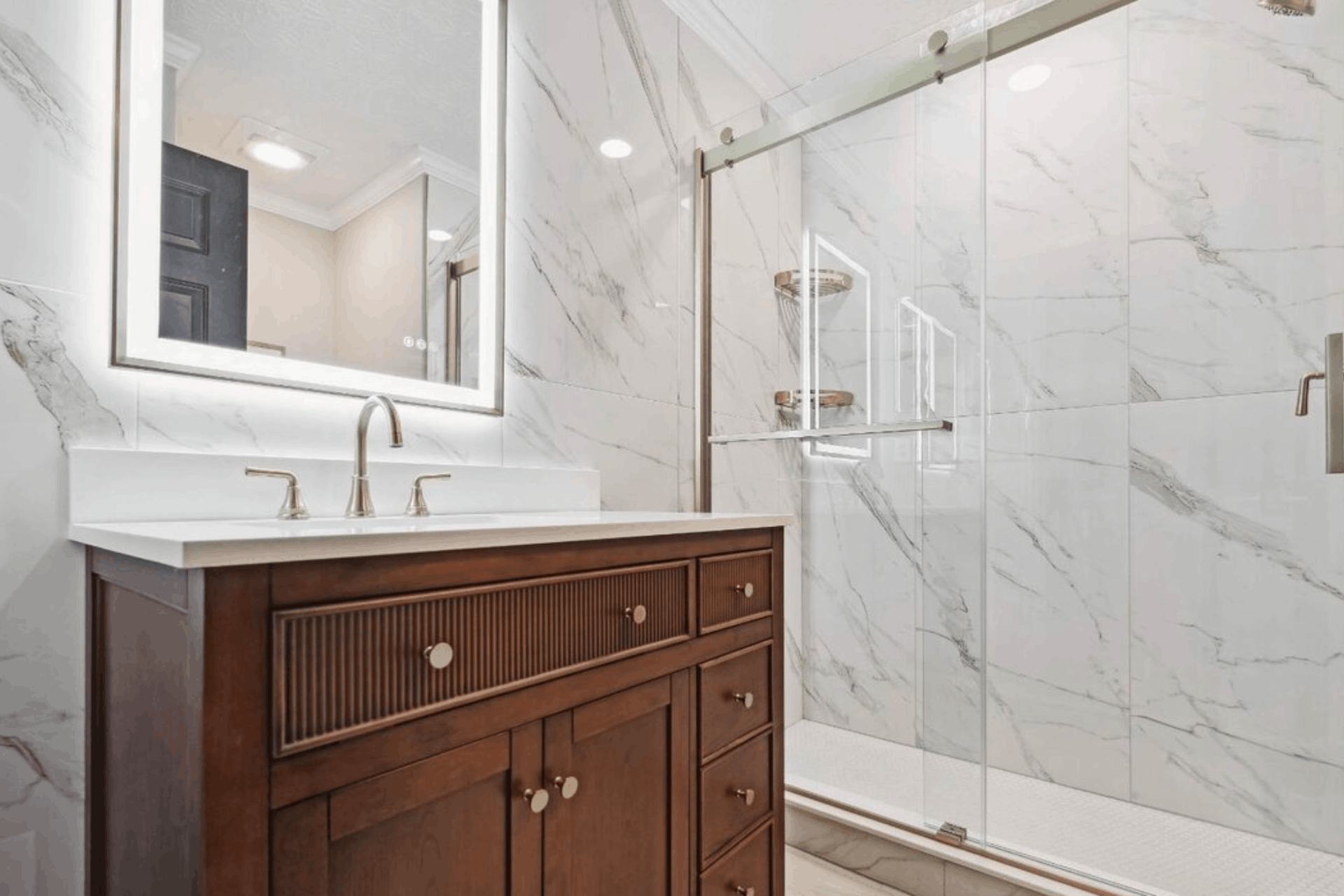
We don’t love trends, because in bathroom remodeling, especially flooring, you want something durable that will last beyond any trend. That said, the trends in 2026 line up with what we already recommend. To help you, we’ve identified eight of the best bathroom flooring options that balance durability and design and continue to perform well over time.
#1: Ceramic and Porcelain Tile
We always recommend ceramic and porcelain tile for bathrooms. Why? Because they resist water, clean easily, and come in endless styles. Bonus: modern manufacturing today offers options that mimic natural stone, wood textures, and minimalist concrete finishes.
#2: Pattern Tile for Statement Floors
When you want a bathroom with personality, we suggest pattern tile. Think geometric patterns and subtle mosaics that make your flooring a design feature in itself.
#3: Luxury Vinyl Plank
Having a moment this year, luxury vinyl plank has improved dramatically in both appearance and performance. It offers excellent water resistance while looking just like wood or stone textures.
#4: Natural Stone Flooring
If you want an elevated, spa-inspired look, we recommend stone materials like marble, slate, and limestone. They do need to be properly sealed to withstand moisture and wear and tear, but when done right, they bring depth and texture to your bathroom floors.
#5: Heated Flooring Upgrades
Who doesn’t want to step out of the shower onto heated floors? This flooring trend uses radiant heating systems installed beneath the tile flooring to create a comfortable experience, especially during colder months. If your budget allows for it, we say go for it.
#6: Microcement or Seamless Modern Finishes
Microcement eliminates grout lines and creates a smooth, continuous surface. These seamless surfaces are quickly gaining popularity because cleaning and maintaining them are so much easier. They also give off a minimalist, contemporary feel that appeals to many of our clients.
#7: Warm Neutrals
Out with the cool tones and in with the warm. These days, we’re seeing more and more requests for warmer beige, taupe, and sand-toned palettes. And we’re here for it. These colors create a softer, less sterile feel.
#8: Textured Tile
One trend we are definitely behind is textured tile. This means matte finishes and our favorite part, lightly textured tiles. The texture here adds visual depth and also makes the flooring more slip-resistant.
How To Choose the Right Bathroom Flooring
When helping customers select the best bathroom flooring, we first focus on how the space is used in order to make durable recommendations. Then we talk about color and pattern. The end result is a timeless look.
Step #1: Set Your Budget First
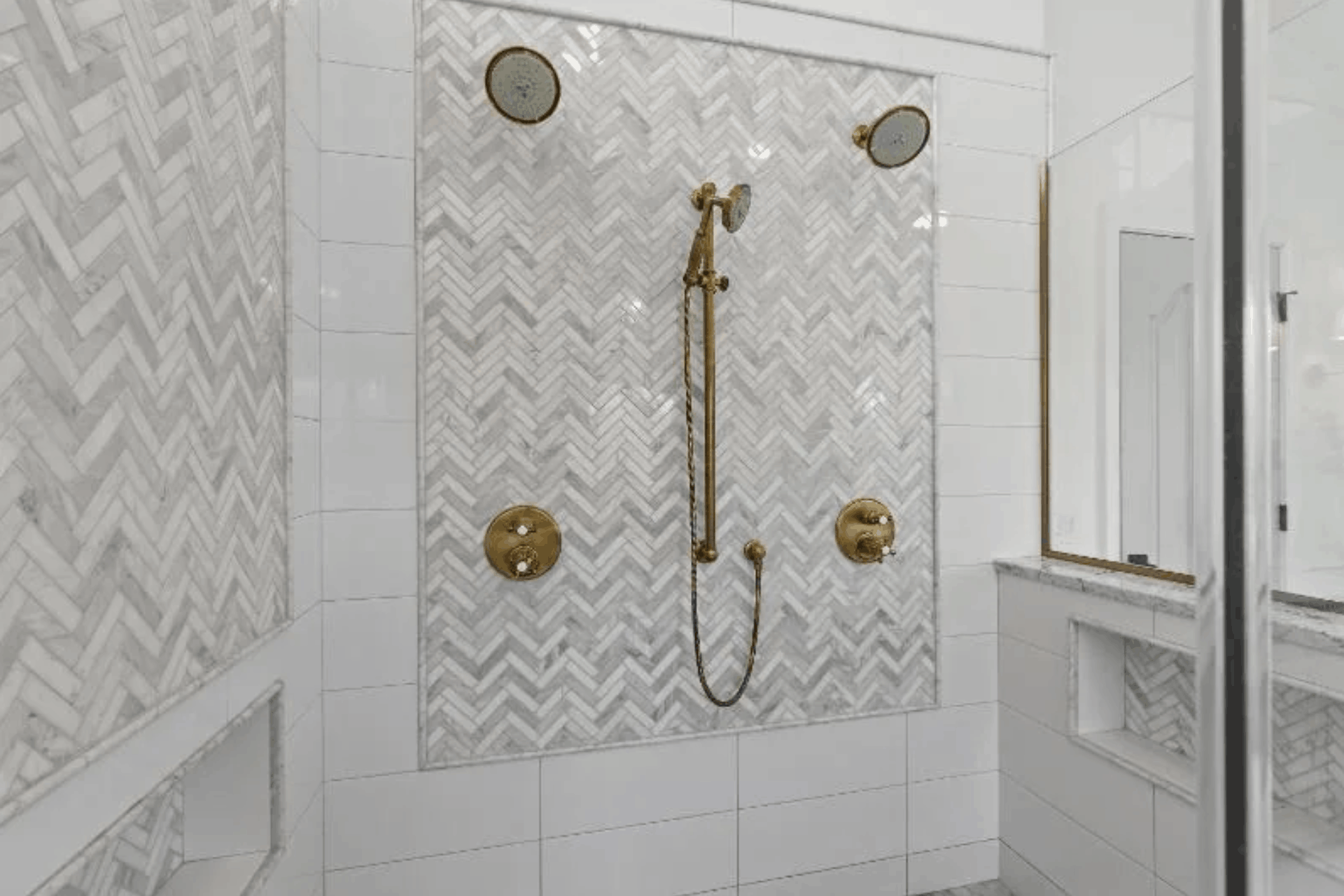
Knowing your budget is the first step in calculating bathroom remodeling costs. Flooring materials vary widely in cost. Tile and natural stone cost more, while vinyl options are more budget-friendly. You must also factor installation into your budget.
Step #2: Consider Your Household Lifestyle
Who uses the bathroom you’re installing flooring in? If it’s elderly adults or children who are both prone to falls, we recommend flooring with stronger slip resistance and durability.
Step #3: Think About Cleaning and Maintenance
Cleaning and maintenance are big ones, especially if you have more than one bathroom in the house. Some materials, like marble, require sealing or special cleaning routines. Others, like vinyl, require minimal upkeep. We especially like the new trend, microcement, which lacks grout lines to clean and maintain.
Step #4: Coordinate With the Rest of the Bathroom Design
The last step is to coordinate what works with your wall colors, cabinets, and countertops. The good news is that there are tons of colors and styles to choose from. You’ll find something that works for your physical needs and complements your aesthetic.
Bathroom Flooring Mistakes To Avoid
Bathroom flooring projects often run into trouble when aesthetics drive the flooring decision instead of performance. Take a look:
- Choosing slippery materials: Highly polished finishes may look attractive, but can become slippery when wet.
- Ignoring grout maintenance: Grout requires periodic cleaning and sealing to prevent discoloration or moisture issues.
- Prioritizing looks over function: Some materials look beautiful but struggle in high-moisture environments.
- Skipping proper waterproof installation: Even durable flooring materials fail without correct waterproofing beneath them. Make sure you’re working with an experienced contractor who regularly works with bathroom tile and flooring.
Bathroom Flooring: Frequently Asked Questions
What is the best flooring for a bathroom?
Porcelain tile remains one of the best bathroom flooring materials because it’s durable, water-resistant, and easy to maintain. Vinyl flooring and properly sealed natural stone are also strong options, depending on your design goals.
Is vinyl flooring waterproof enough for bathrooms?
Modern vinyl products are fully waterproof and perform well in bathrooms. Like any material, though, they do require proper installation from a trained contractor to prevent moisture from reaching the subfloor.
What bathroom flooring is easiest to maintain?
Porcelain tile and luxury vinyl flooring typically require the least maintenance. These materials resist moisture and clean easily with standard household products.
Is tile always the best choice?
Not necessarily. While tile remains popular because of its durability and water resistance, materials like vinyl, stone, and microcement also work well, depending on your design goals and lifestyle needs.
How much does bathroom flooring replacement cost?
The average cost to install bathroom flooring, including material costs and labor, is around $3,500. That cost varies depending on the bathroom size and the tile type and size.
Work With Premier Remodeling for Bathroom Flooring You’ll Love
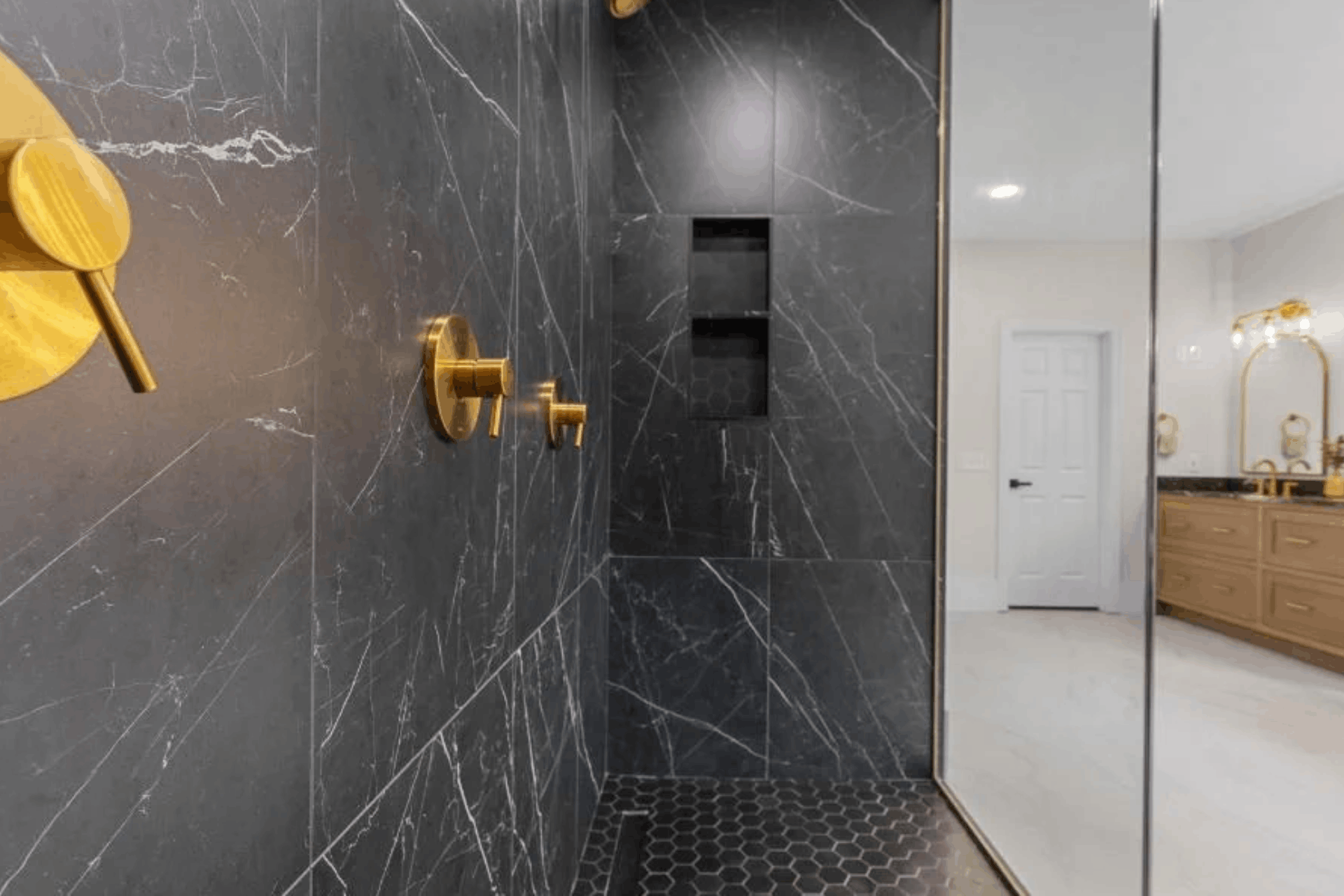
We want to help you choose finishes for your bathroom remodel. Use our guidance to find the best bathroom flooring to support your daily use and long-term design goals.